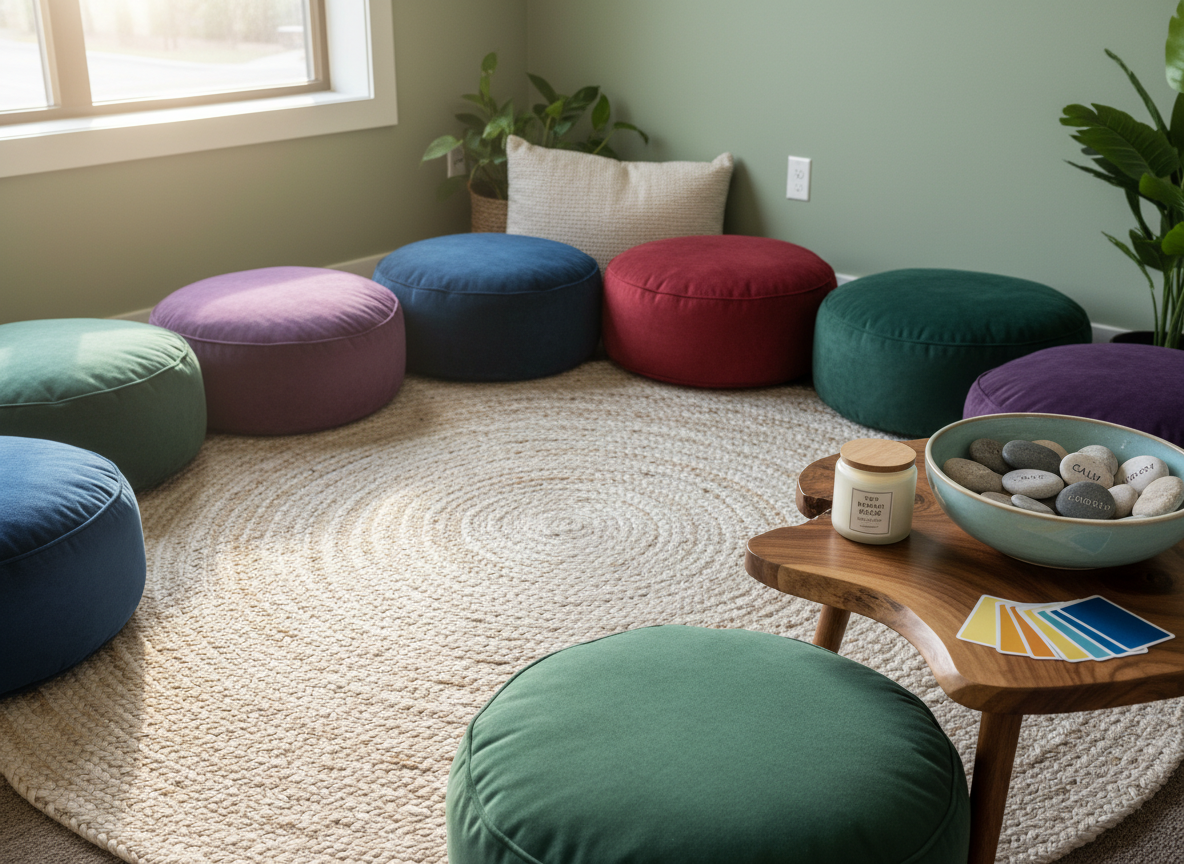
A cozy, thoughtfully curated healing corner in a community center, rendered in highly realistic photography. A low, circular woven rug in natural fibers anchors the space, supporting a cluster of plush floor cushions in muted jewel tones. A small wooden side table holds a ceramic bowl of polished affirmation stones, each etched with a single empowering word, alongside an unlit soy candle and a stack of slim, colorful emotion cards. Soft, diffused morning light streams through a nearby window, creating gentle highlights on the textures of fabric and wood. Shot from a slightly elevated angle using the rule of thirds, the scene feels welcoming, grounded, and professional, evoking a safe, restorative environment for youth and families to explore emotional literacy and community healing.

Our Programs

Explore heart-centered tracks for youth, caregivers, and mentors rooted in emotional literacy and community healing.

Programs
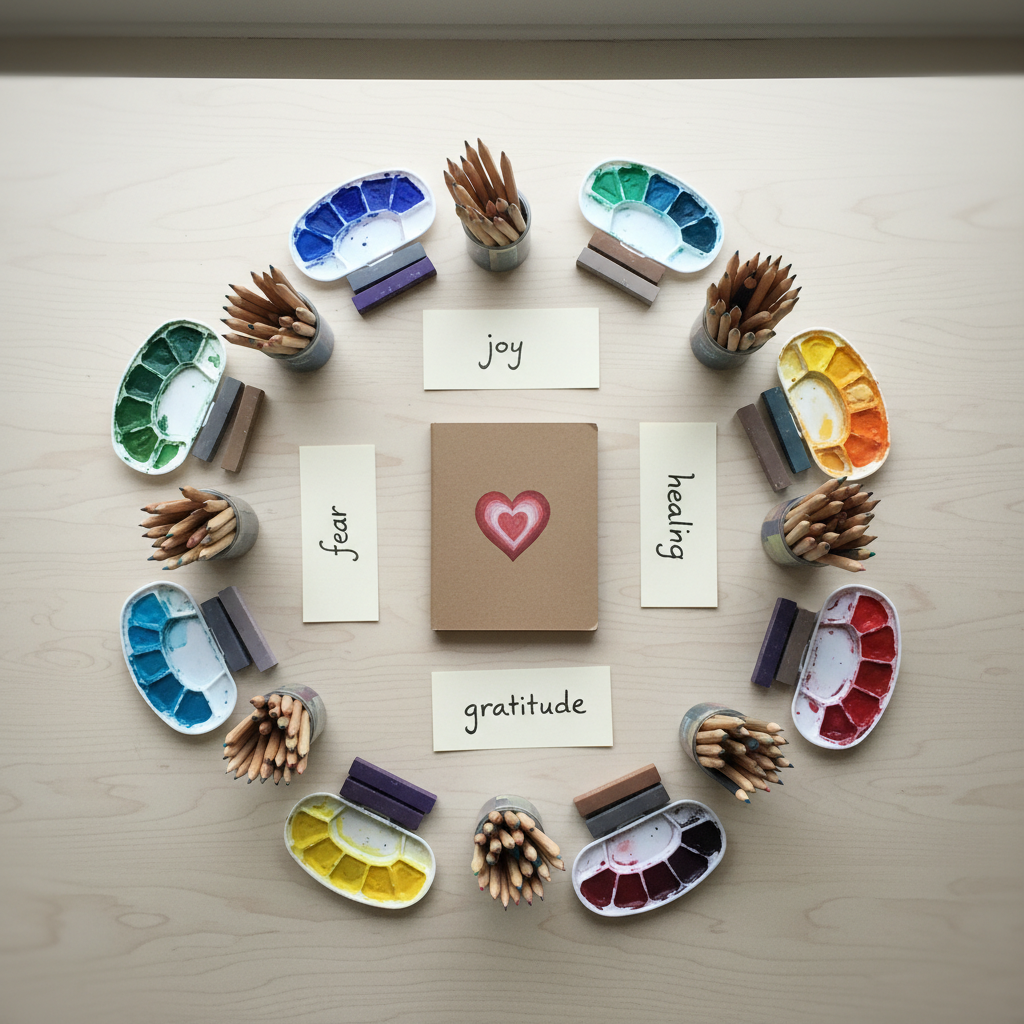
A circular arrangement of art therapy materials laid out on a large, pale birch table, photographed from directly above in clean, modern photographic realism. At the center rests a kraft-paper notebook with a small, painted heart on the cover. Radiating outward are neatly placed colored pencils, pastel crayons, and smooth watercolor palettes in soft blues, greens, and warm oranges. Beside them, labeled cards read “joy,” “fear,” “gratitude,” and “healing.” Soft overcast window light washes evenly across the scene, eliminating harsh shadows and creating a gentle, contemplative mood. The composition is symmetrical and balanced, suggesting structure and safety, with subtle blurred edges at the corners to keep attention on the central heart notebook and emotional word cards.

Emotional literacy circles teach youth to name feelings, manage stress, and practice compassion through art, storytelling, and reflection.

A minimalist mentorship planning desk set against a smooth, light gray wall, captured in clean, professional photographic realism. On the desk, a large weekly planner lies open, its pages filled with neatly written, color-coded goals and check-in times. Nearby, a stack of neatly printed worksheets titled “Feelings Map” and “Support Circle” is clipped together, alongside a sleek tablet displaying a simple heart-and-circle logo. A small potted plant with broad green leaves and a ceramic mug of herbal tea add warmth. Cool, diffused daylight from an unseen window illuminates the workspace evenly, creating soft, defined shadows. Shot from a three-quarter overhead angle with sharp focus, the composition emphasizes organization, clarity, and intentional care in designing mentorship and emotional literacy programs.

Mentorship pathways connect youth with trained adults for culturally-rooted guidance, academic support, and leadership development grounded in healing justice.

About

Program Guides and Resources

Access printable curricula highlights, weekly session outlines, and reflection worksheets designed for families, educators, and mentors. Browse our calendar to find upcoming circles, trainings, and community healing events, or download sample activities to bring the Heartwork Archives into your home, classroom, or organization.

Voices

Rating: 5 out of 5.

Before Heartwork, my emotions felt messy; now I have language, tools, and a mentor who believes I can rewrite my story.

— Aya Nakamura

Rating: 4 out of 5.

Mentoring through the ABC Project transformed me too; I learned trauma‑aware listening and watched my mentee grow from withdrawn to confidently leading peers.

— Lila Patel

Rating: 4 out of 5.

Family nights helped us listen instead of argue. We left each session lighter, with concrete practices we still use every day.

— Mateo García

Rating: 5 out of 5.

My son used to shut down when angry. After the emotional literacy series, he names feelings and asks for support instead of exploding.

— Aya Nakamura